
Why a vegetable grown 20 km away is worth more than a cheaper one from 500 km
Most vegetables in our markets travel a day or more from Tamil Nadu and Karnataka. Growing them on idle land here shortens the trip, keeps the money local and makes the spray record knowable.
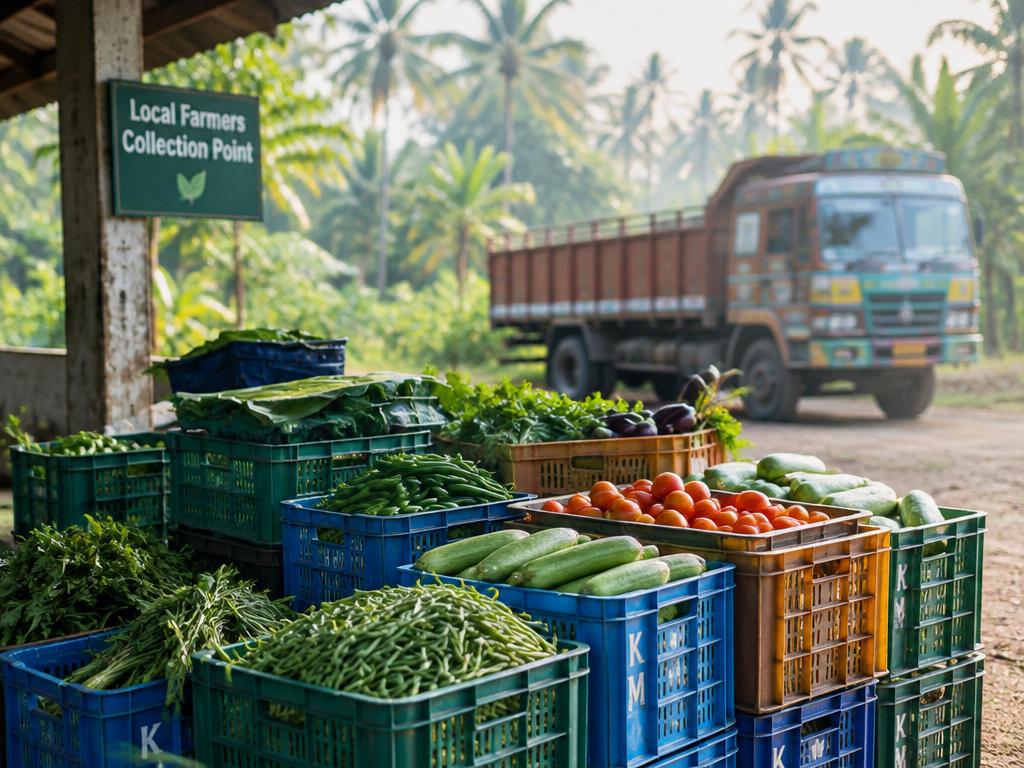
- Typical distance for market stock
- 400-600 km
- Our farm-gate to shop
- Same day
- Batch code on every crate
- Yes
- Idle land needed per vegetable cluster
- 5-10 acres
The trip is the problem
A vegetable that leaves a field in Tamil Nadu in the evening reaches a Kerala market the next day at the earliest, often later. To survive that trip it is picked early, handled hard, and sometimes treated to look fresh at the end of it.
None of that is a moral failing of the grower or the trader — it is what the distance demands. The fix is not to blame the lorry; it is to shorten the trip.
The land is already here
Almost every panchayat has plots lying uncultivated — owners abroad, labour hard to arrange, nobody to manage a crop. Five to ten acres of that, farmed in rotation, supplies a steady weekly basket of greens and gourds for the neighbourhood around it.
The missing piece was never soil or demand. It was somebody to plan the crop, arrange the team, verify the work and buy the harvest.
What changes when it is grown nearby
Produce reaches the shop the day it is cut. The wage for growing it stays with a local SHG unit. The lease and revenue share stay with a local landowner. And because every crate carries a batch code, a shopper can look up which plot it came from and what went into the soil.
That is the case we are building, plot by plot — not an argument on paper but a record anyone can check.
Want to be part of the next one?
Landowners can list a plot, SHG units can apply to take up field work, and anyone in Kerala can buy the produce.
More updates
- A plot that sat idle for seven years is now a banana field
2 September 2026 · Chirakkal, Kannur
- SHG spotlight: a Kudumbashree unit running a full vegetable rotation
19 August 2026 · Mattannur, Kannur