
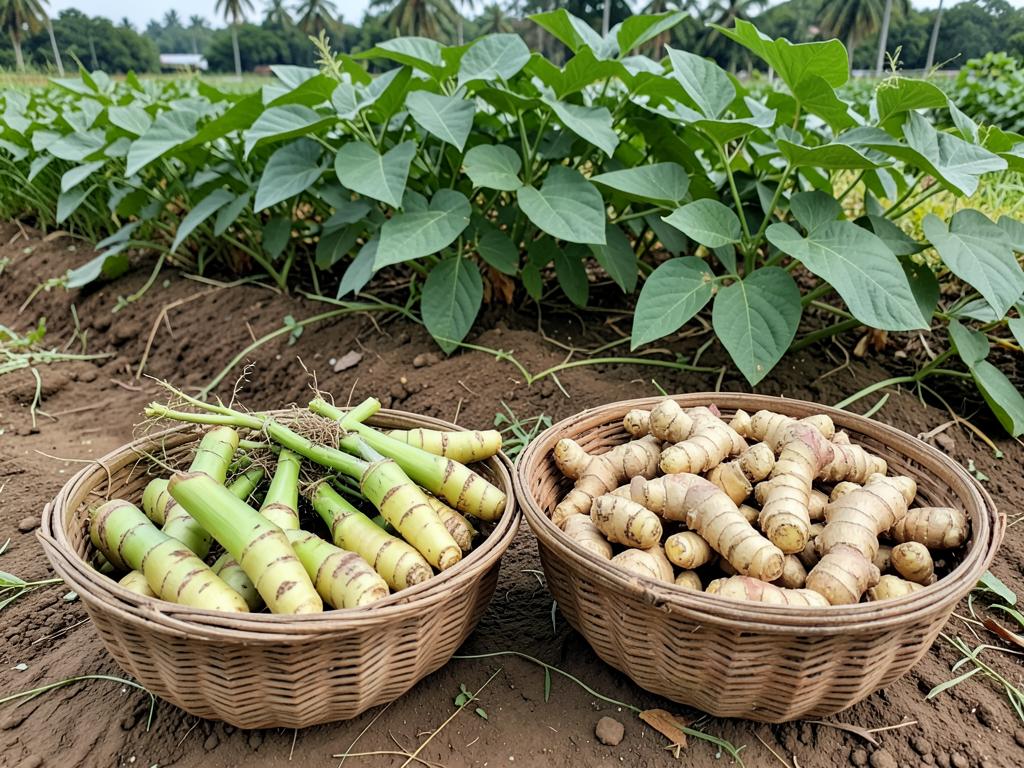
Turmeric & ginger plot
Turmeric and ginger suit Kerala's rain pattern and, once dried, keep for months — so the harvest does not have to be sold in a hurry. Rhizomes are planted with the pre-monsoon showers on raised beds, earthed up twice through the season, and lifted after eight to nine months. Organic turmeric in particular sells at a premium to spice buyers.
Land needed
0.25 acres+
First harvest
8 months
Indicative yield
7,500 kg/acre
Water need
High
Species covered
2
What gets planted
| Species | Soil pH | Harvest | Yield / acre | Rate |
|---|---|---|---|---|
| Turmeric | 5–7.5 | 9 months | 8,000 kg | ₹60/kg |
| Ginger | 5.5–6.5 | 8 months | 7,000 kg | ₹70/kg |
The full crop cycle
Every stage below is tracked in the app: field staff close tasks with photos and a location, and a supervisor approves them before the cycle moves on.
- 1
Land preparation
Month 0–1Clearing, soil testing, ploughing, organic manure and compost application, drip or channel irrigation laid out, GPS pin and photos recorded.
- 2
Planting
Month 1–2Certified planting material set out at recommended spacing by the assigned SHG team, with a photo of every completed block.
- 3
Nursing & feeding
Month 2–4Weeding, mulching, organic top dressing, staking and irrigation on a fixed task calendar. Each task closes only with proof.
- 4
Pest & disease watch
Month 2–9Weekly scouting with photos. Only organic controls — neem, bio-pesticides, traps. An advisor is consulted for anything unusual.
- 5
Harvest
Month 9–10Graded picking, weight logged batch by batch against the crop cycle, each batch given a QR code that a buyer can trace.
- 6
Sale & settlement
Month 9–10Produce moves to our storefront and procurement buyers. Owner payout, SHG wages and produce credit are settled from the recorded weights.
What this means for you
For landowners
- Your land stays in your name. We work on it under a written lease or revenue-share agreement with a fixed tenure.
- Three ways to be paid: a fixed monthly lease per acre, a share of revenue, or produce credit you can spend in our store — or a mix.
- We carry the cost of planting material, labour, inputs and irrigation. You are not asked to invest.
- You see stage photos, task completions and harvest weights for your parcel in your dashboard.
- The land is returned cleared and soil-tested at the end of the tenure.
For SHG teams
- An empanelled SHG team is assigned to the parcel and owns the day-to-day field work.
- Work arrives as dated tasks on the phone, with the stage checklist for that crop.
- Every task closes with a photo and a GPS location; a supervisor approves or returns it with a note.
- Payment is per approved task or per stage, settled into the team account with a visible ledger.
- Tasks can be completed offline in the field and sync when the phone finds a network.
For investors
- Eight to nine month cycle with a dried product that can be held for a better price.
- Seed rhizome is the single biggest input cost and is bought once per cycle.
- Buyers include spice traders, our procurement desk and retail customers on the storefront.
- Boiling, drying and polishing turmeric adds margin over selling it raw.
- Main risks are rhizome rot in waterlogged soil and seed-material price swings.
All figures on this page are indicative planning numbers drawn from our crop catalogue. Actual yield, timing and price depend on soil, weather and market. This is a private venture with no government affiliation, and nothing here is an offer of guaranteed returns.