
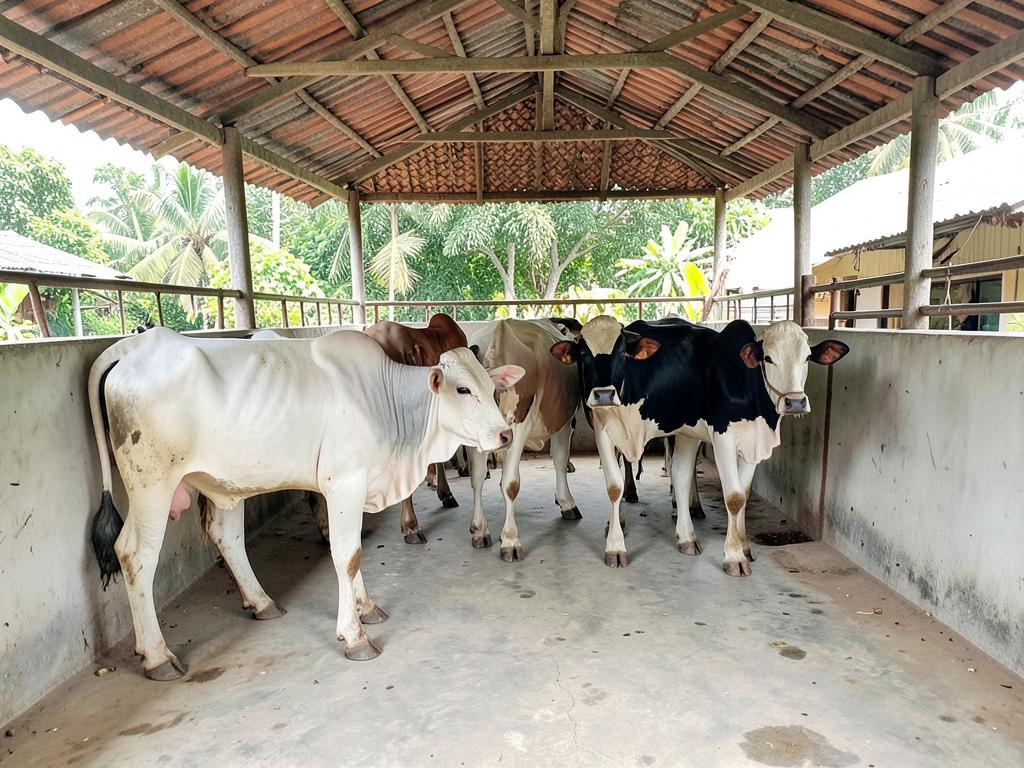
Small dairy unit
A dairy unit does not depend on soil chemistry, so it works on parcels a crop would fail on — what it needs is water, a shed and reliable daily labour. Animals come in after the shed and fodder plot are ready, and milk starts flowing within about three months. Unlike every crop model, the income is daily rather than seasonal.
Land needed
0.5 acres+
First harvest
3 months
Indicative yield
4,500 kg/acre
Water need
High
Indicative setup
₹6,00,000
Species covered
1
What gets planted
| Species | Soil pH | Harvest | Yield / acre | Rate |
|---|---|---|---|---|
| Dairy farm | 5–8 | 3 months | 4,500 kg | ₹48/kg |
The full crop cycle
Every stage below is tracked in the app: field staff close tasks with photos and a location, and a supervisor approves them before the cycle moves on.
- 1
Site & shed
Month 0–2Shed built with a sloped floor, drainage, water line and a manure pit; the parcel is checked for access and effluent handling.
- 2
Fodder plot
Month 1–3Napier or fodder maize planted on part of the parcel to cut bought-feed cost, plus silage or dry fodder storage.
- 3
Animals & vet setup
Month 2–3Crossbred milch animals sourced and health-checked, vaccination and deworming schedule set with a veterinarian.
- 4
Daily operations
Month 3–36Two milkings a day, feeding, shed cleaning and health observation recorded as tasks; yield logged animal by animal.
- 5
Milk sale & by-products
Month 3–36Milk goes to society collection and local buyers daily; slurry and dung return to our own crop parcels as organic manure.
What this means for you
For landowners
- Works on land with poor soil, as long as there is water and vehicle access.
- The shed is a permanent improvement; who owns it at the end of the tenure is written into the agreement.
- Effluent and manure handling is our responsibility and is inspected.
- Half an acre is enough for the shed plus a fodder patch.
For SHG teams
- This is the most demanding model for a team — work happens every single day, twice a day.
- Milking, feeding, cleaning and health checks arrive as daily recurring tasks.
- Yield per animal is logged, so a team's care shows directly in the record.
- Pay is monthly rather than per harvest, which suits teams wanting steady income.
For investors
- Daily revenue from month three, which is the shortest path to cash flow of any model here.
- Highest setup cost per unit — shed, animals and equipment are all upfront.
- Feed is the dominant running cost; the on-site fodder plot is what protects the margin.
- Manure is a real second output, used across our own organic parcels.
- Main risks are animal health, feed price rises and dependence on skilled daily labour.
All figures on this page are indicative planning numbers drawn from our crop catalogue. Actual yield, timing and price depend on soil, weather and market. This is a private venture with no government affiliation, and nothing here is an offer of guaranteed returns.